

Strength training should feel approachable
Personal training for older adults does not need to look like a loud gym workout. For many clients, the best place to begin is at home, with clear coaching, simple equipment, and exercises that match current ability. The goal is to build strength and confidence without making the process feel overwhelming.
At Sound Fitness, sessions can be adjusted around comfort, available space, and the equipment already in the home. That may mean using a chair, a wall, light dumbbells, resistance bands, steps, or bodyweight movements. The important part is not having perfect equipment. The important part is starting with a plan that feels realistic.
Why strength matters as we age
Strength supports everyday life. Getting out of a chair, walking up stairs, carrying groceries, playing with grandkids, gardening, traveling, and moving around the house all depend on the body being able to produce and control force.
A thoughtful strength plan can also include balance practice, mobility work, posture awareness, and coordination. Those pieces help clients feel more capable during normal daily tasks. This is fitness coaching, not medical care, so the focus stays on movement quality, consistency, and appropriate progression.
Balance and mobility can be trained gently
Balance work does not have to be risky or complicated. It can start with supported movements, controlled weight shifts, careful stepping patterns, or standing exercises near a stable surface. The trainer can adjust the challenge based on how steady the client feels that day.
Mobility work can also be simple. Ankles, hips, shoulders, and the upper back often benefit from regular movement through comfortable ranges. The aim is to help the body feel more prepared for daily tasks, not to force positions or chase extreme flexibility.
Home is often the best setting
Training at home can feel calmer and more personal. There is no need to navigate gym equipment, compare yourself to other people, or rush through a crowded space. The trainer can see the environment where daily movement actually happens and build the session around it.
For older adults in Kirkland, Redmond, Bellevue, Seattle, Burien, Renton, Shoreline, Everett, Sammamish, and nearby communities, that convenience can make consistency easier. If transportation, weather, parking, or gym intimidation has been a barrier, in-home sessions remove a lot of the friction.
A good session starts with communication
The first step should be understanding the person, not handing over a generic workout. A trainer should ask about goals, training history, comfort level, home setup, and any boundaries the client wants respected. If a client has medical restrictions, recent procedures, or active symptoms, those questions belong with the appropriate medical provider.
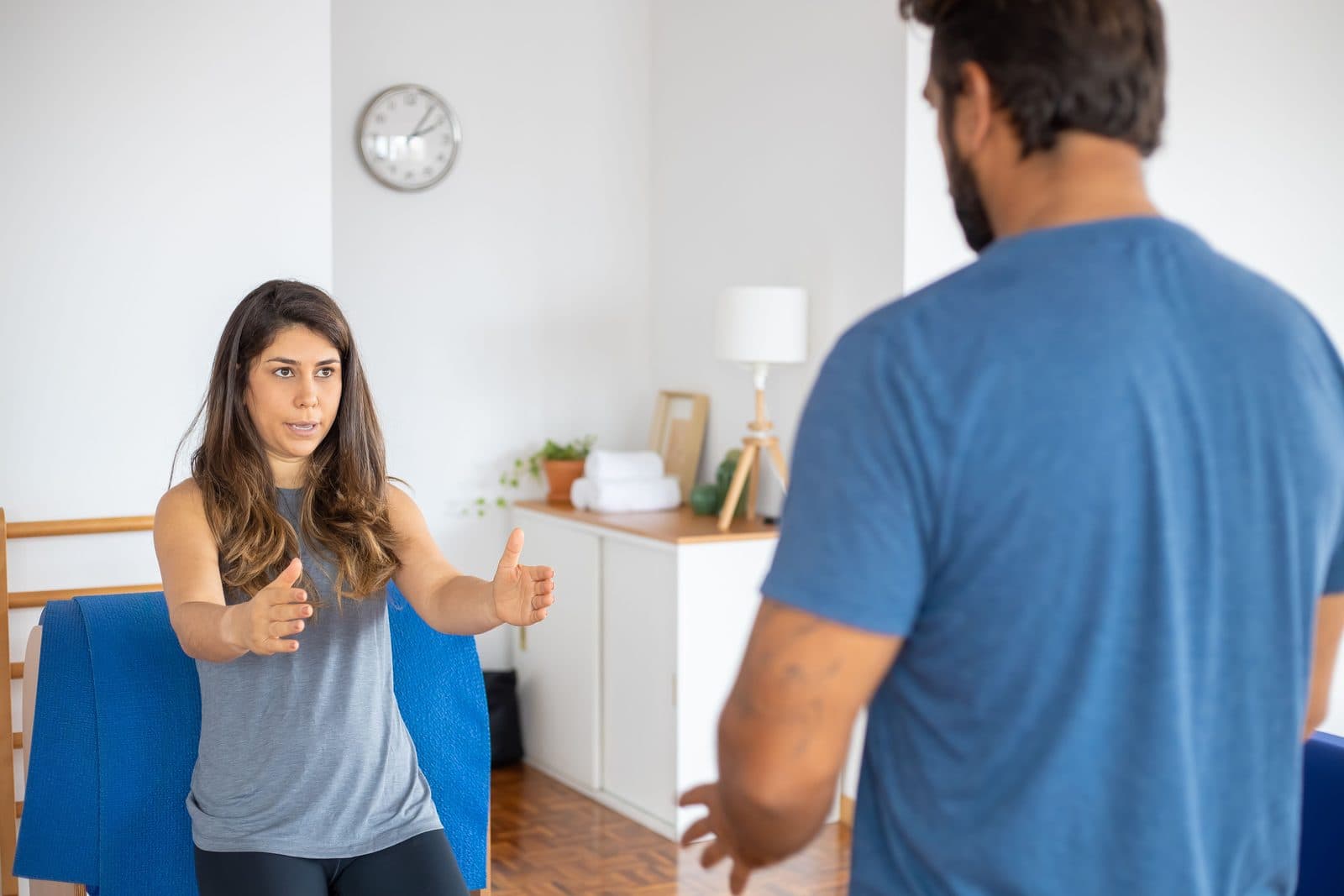
During the session, feedback matters. If an exercise feels awkward, too hard, too easy, or uncomfortable, the trainer can modify it. That may mean changing the range of motion, using support, slowing the tempo, changing the exercise, or taking more rest.
Confidence is part of the progress
Progress is not only heavier weights. For older adults, progress may look like standing up with more control, feeling steadier on steps, understanding how to warm up, or having a simple routine that can be repeated between sessions.
If you or someone in your family wants beginner-friendly coaching at home, Schedule a Free Intro Session. Sound Fitness can help you talk through goals, comfort level, and what kind of support would make strength training feel more doable.
Card 1 of 616