

Balance is a skill you can practice
Balance can feel like something you either have or have lost. It is easier to work with when you treat it as a skill. Your body puts steadiness together in the moment, out of information it gathers and small corrections it makes, and anything assembled that way answers to practice. That is the part worth knowing before anything else, because it changes what you do next. A skill can be worked on. A verdict cannot.
The usual story runs the other way. Something feels shaky on the stairs, so the stairs get avoided. The garden gets skipped, then the basement laundry, then the walk down the hill. Each of those was practice, and quietly the practice stops. Adding it back on purpose, with someone watching, is what balance training is. Anything that changed suddenly, or that arrives with symptoms, belongs with your provider first.
What steadiness is actually made of
Standing still is busier than it looks. Your eyes report where the room is. The inner ear reports which way is up and whether your head is moving. Your feet and ankles report what the floor is doing underneath them. Your brain compares those reports and sends small corrections out to the muscles, over and over, all day, without asking you first.
Then something has to carry the correction out. A small sway is handled at the ankles. A larger sway moves the hips. Past that, a foot has to leave the floor and land somewhere useful, quickly. Each of those pieces answers to training: the senses by getting varied work, the corrections by being rehearsed, and the speed behind them by asking the legs and hips for real effort.
Why the room you practice in matters
A gym floor is level, evenly lit, and the same underfoot from end to end. Almost nothing in a house is. There is the rug that slides a little, the threshold into the kitchen, the step down to the garage, and the turn at the bottom of the stairs you take with a laundry basket in your arms and no hand free for the rail.
Practice pays off closest to the conditions you practiced in, which is why a level gym floor is a poor stand-in for your own hallway. The details here are local. Split-level houses in Kirkland and Juanita, a Bellevue living room that sits down a step, porch stairs in Seattle that stay damp most of the year, a Redmond hallway that runs dark by afternoon. Sessions at home work on those instead of describing them.
What the work looks like in a real house
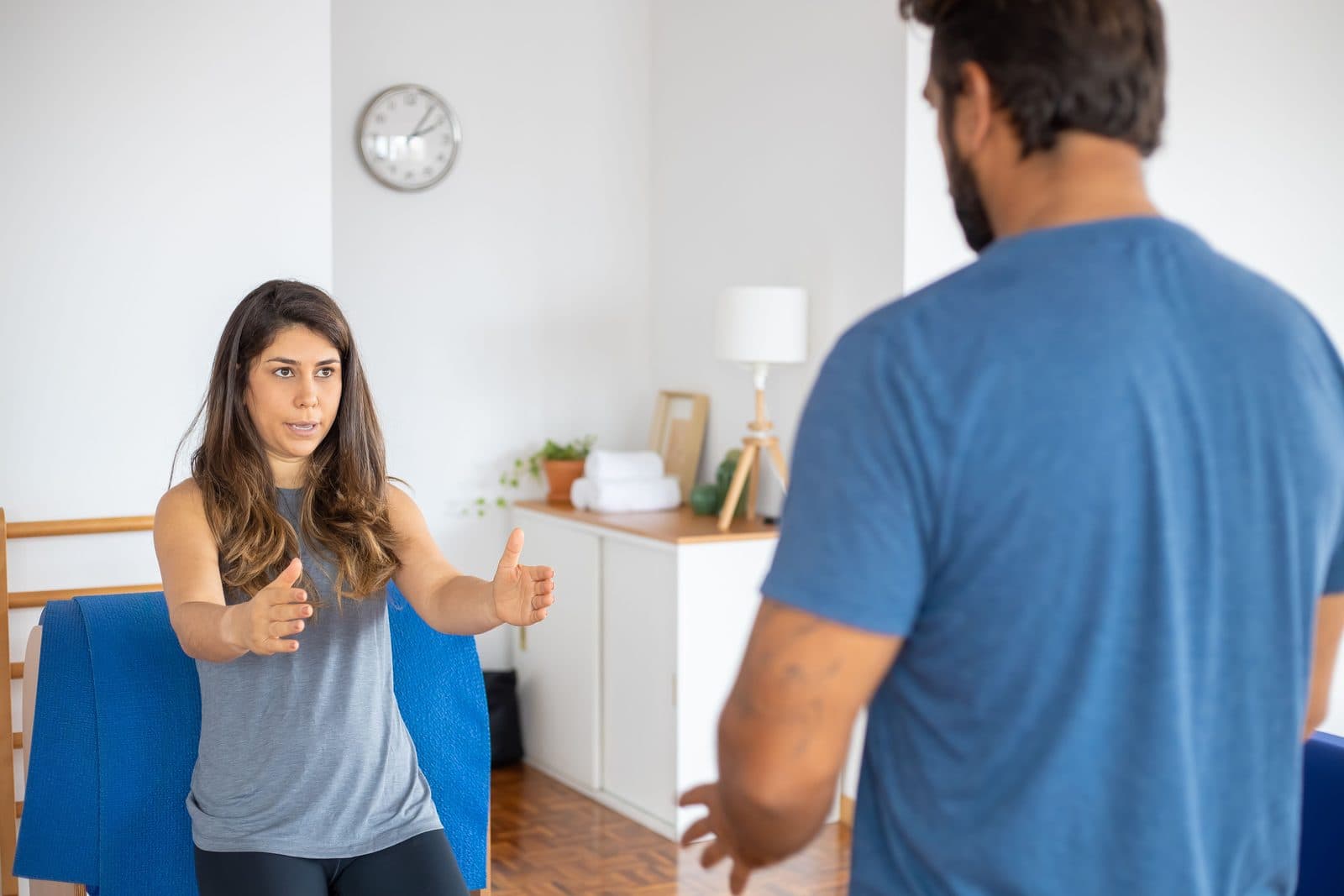
Most of it starts within reach of something solid. A counter, a sturdy chair back, a door frame. From there the work is weight shifting, narrowing the stance, stepping in different directions, turning, and reaching off to the side or overhead while the feet stay honest. Support is a dial rather than a yes or no, and it gets turned down as the movement gets easier to own.
Then it moves into the house. Getting out of the chair you actually use. Stepping up onto the bottom stair and back down under control. Getting down to the floor and back up, rehearsed with support long before it is asked for on its own. Turning in a kitchen with your hands full. Your coach records how much support each took, and that record is where the next session starts.
Strength is what makes a correction possible
Steadiness work and strength work are not separate projects. A correction has to happen fast. The hip has to fire, the foot has to land where you sent it, and the leg underneath has to hold what arrives on it. When the legs and hips cannot produce that quickly, the sense that something is off still arrives on time and the answer to it does not.
So the legs, hips, trunk, and grip get trained alongside the balance practice, at loads that look controlled on the day rather than loads set in advance. Lowering slowly matters as much as standing up, because a step down, a chair, and the floor are all lowering jobs. Grip belongs in it too. A rail is only useful if the hand can close on it and stay closed.
How confidence comes back
Confidence does not return because somebody tells you not to worry. It returns as evidence. You went down to the garage and back without planning the trip first. You turned to reach the top shelf and nothing lurched. You got up off the floor after the grandkids left. That is also the kind of specific an adult son or daughter across town is looking for when they arrange sessions for a parent.
Balance coaching is general fitness work, not medical care. If a physician or physical therapist has given you instructions, sessions run inside them rather than around them, and anything that belongs to a provider stays with the provider. That is also why the free assessment from Sound Fitness happens in the house instead of over the phone. Your coach walks the rooms and the stairs you use, and the first plan gets built on what is actually there.
Card 1 of 616